Is Urban Design Failing Women? A Call for Gender-Responsive Planning in London
Can a city truly be inclusive if half its population feels unsafe navigating it? As London reimagines its future through an update to the London Plan, it’s time to ask: is urban design failing women – and what would a truly gender-responsive city look like?

What is Feminist Urbanism?
Feminist urbanism is a specific approach within gender-responsive urban design that prioritises the needs and safety of all genders—particularly women, LGBTQ+ individuals, and marginalised communities. This mode of thinking recognises that the built environment affects people in different ways and seeks to create equal, accessible and safe spaces for all, within urban areas.
Arguably, male-centric urban design has been the historical norm, structured around a “zoned” city where housing, work, shopping, and entertainment are segregated, often neglecting the lived realities of women, such as caregiving responsibilities and personal safety concerns, which shape their movement patterns within the city.
There are stark differences in gendered experiences of cities.
According to the Office for National Statistics (2021), women are 2.5x more likely to feel unsafe walking alone at night in the city. In addition, Plan International UK indicated that 66% of 14–21-year-old girls have experienced sexual harassment in public spaces. These statistics are not just numbers – they represent systemic failures, particularly in the design of public spaces.
Why Are People Talking About It More? Why the Growing Interest?
Following movements such as #MeToo and HeForShe, there has been a growing global consciousness around social justice and gender equity. This has brought feminist urbanism into the mainstream, challenged outdated norms and advocating fairer, more inclusive cities. Fair representation in urban design isn’t a new topic. Doreen Massey brought the gendered experiences of cities into public discourse in 1994, through her seminal work ‘Space, Place, and Gender’. She has gone on to inspire other feminists like May East, whose recent work “What if Women Designed the City: 33 leverage points to make your city work better for women and girls” is making positive waves throughout the gendered cities workspace.
Scotland Leading by Example
Applying these learnings into practice, Scotland is at the forefront of Feminist Urbanism, leading the way in both policy and practice
Setting the standard for gender-conscious urban design, the Scottish Government’s “Designing Streets” policy promotes walkable, people-friendly environments. In Edinburgh, a pilot project in gender-sensitive street design reported a 40% reduction in harassment due to better lighting and open sight lines. Glasgow City Council has committed £5 million to improve public spaces with a focus on women’s safety.
-
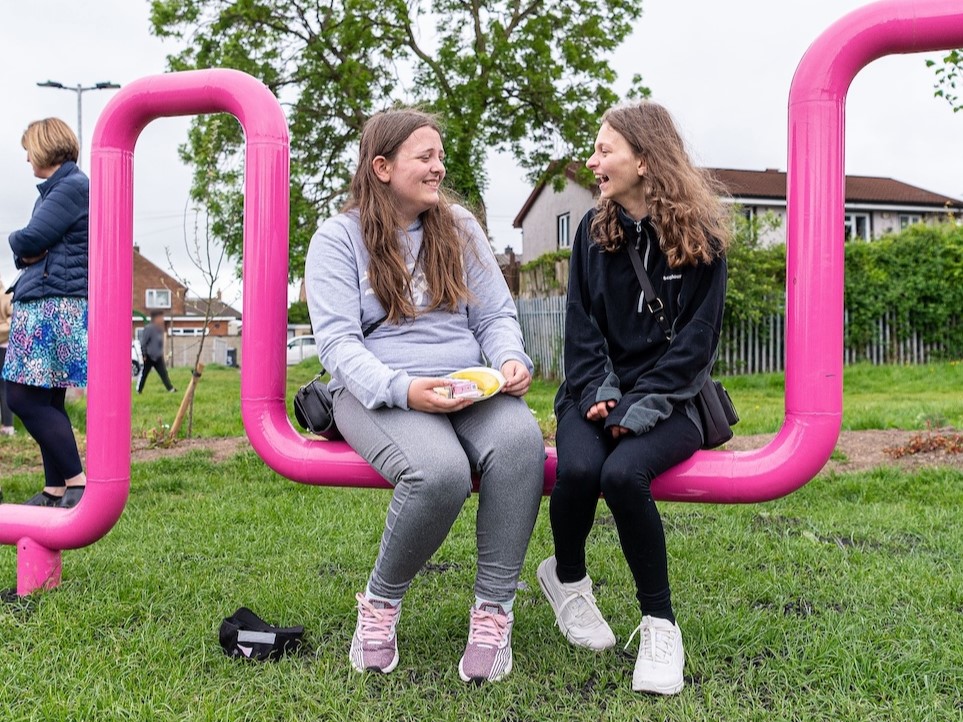
Image Credit: Claire Epton
-

Image Credit: Arch Daily
Can London learn a valuable lesson?
London already has an ambitious planning policy landscape, with the London Plan 2021 designating a section on ‘Making London’s night-time culture more enjoyable and inclusive’. However, a 2022 study by the Greater London Authority found that 55% of women still avoid certain areas due to safety concerns.
Taking Scotland’s model should involve revisiting policies regarding city lighting, park security, and community participation in planning matters. With an updated London Plan in a consultation stage, London has an opportunity to reshape its public spaces to be more inclusive, ensuring that all users feel safe and supported.
What other tools are out there for designers?
Despite a lack of policy framework to uphold design standards, there are numerous tools to guide designers in bringing these design interventions to real life. The UN have various programmes, such as Cities Alive: Designing Cities That Work for Women | United Nations Development Programme which create a synergy between user and space. This framework moves beyond merely minimising perceived danger to creating access to free and full participation in urban life.
The UN Habitat policy Her City – A Guide for Cities to Sustainable and Inclusive Urban Planning and Design together with Girls (third edition) | UN-Habitat project provides a participatory toolkit and process to include women in urban planning, design and development. Similarly, organisations such as MAKE SPACE FOR GIRLS, a charity who campaigns for parks and public spaces to be designed with teenage girls in mind, have already shown the difference that focused interventions, such as rethinking how parks and public spaces are planned.
Always striving to incorporate this process into more designs, M+A have sought to collaborate with MAKE SPACE FOR GIRLS to encapsulate wellness benefits, a sense of community, delivering a safe and resilient spaces, sustainable transport, and ecological design.
With our work at Wembley Park Gardens for Places for London and Barratt London, the design process had regular youth review panels took place to engage the local youth, particularly female teens. Engaging with a diverse range of stakeholders in urban planning encourages a more inclusive policy to design a cohesive urban space; catering for the whole community’s needs. M+A have been key in the design at Wembley Park Gardens bringing the project to life with placemaking, making spaces around which the community use as a hub.
Call to action
The role of designers is crucial to embed feminist urbanism into the fabric of our cities. As an increasing number of women are making careers in the built environment industry, their experience should be foremost in decision making at all stages. By making inclusivity the top priority, designers can create spaces that are not only safe and functional for women but good for all. However, this work requires strong leadership, strategic buy-in, and recognition that there’s no single “correct” solution.
Urban planners, policymakers, and local communities should work together to reclaim and redefine the city for a more equitable future. Projects that embed gender inclusion demonstrate that designing for those most marginalised can create better outcomes for everyone.