CAN NATURE -BASED SOLUTIONS BUILD CLIMATE RESILIENCE?
Nature-based Solutions could be the heart of adapting to climate resilient cities, however are we giving them enough attention? If policies take time to embrace, should a landscape-led development approach be the default for ensuring these fundamental measures are integrated into our developments? Gen Shintaku argues this should be so.
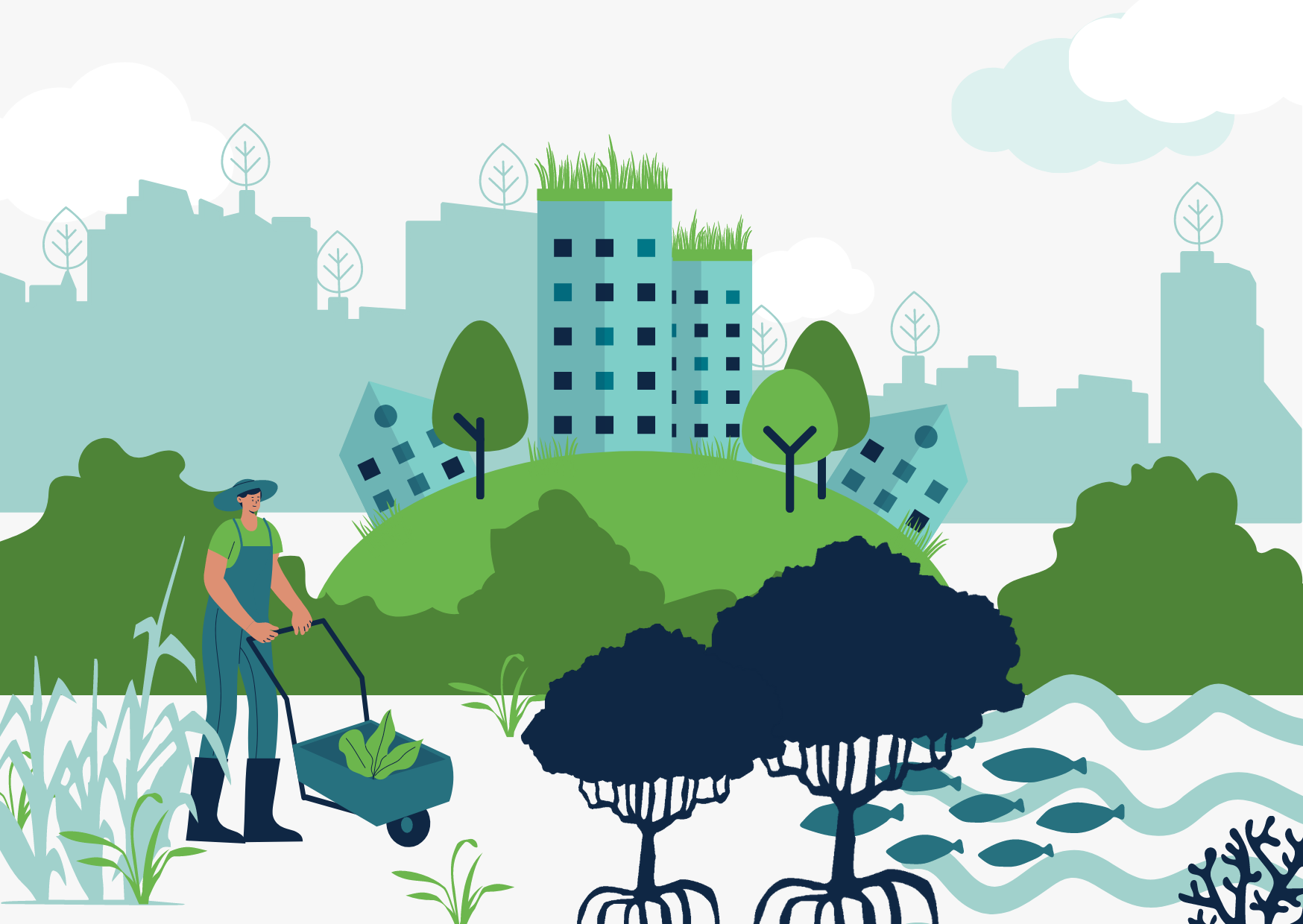
Image credit: E. Weynants
Current Climate
The impacts of climate change are increasingly evident across the UK. The heatwaves of last summer and recurrent flooding events highlight an ever-growing need for systemic responses to climate resilience. As built environment professionals at the forefront of this challenge, it is our mission to explore strategies for adaptation and climate resilience. One promising approach is the implementation of Nature-based Solution (NbS).
What are Nature-based Solutions?
The United Nations defines Nature-based Solution (NbS) as:
“actions aimed at protecting, conserving, restoring, and sustainably managing natural or modified terrestrial, freshwater, coastal, and marine ecosystems, which address social, economic and environmental challenges effectively and adaptively, while simultaneously providing human well-being, ecosystem services, resilience and biodiversity benefits.”
Traditionally, climate resilience in cities has relied heavily on grey infrastructure – engineered solutions, such as concrete flood barriers or drainage systems, designed to be effective only in certain scenarios. In contrast, NbS offer multi-functional benefits and often more sustainable, cost-effective, and adoptable for unpredictable climate change. The Catalogue of Nature-Based Solutions for Urban Resilience, published in 2021, outlines 14 typologies of NbS that operate at various spatial scales – from river basins, city-wide applications to neighbourhood-scale interventions. Interpreting this series of typologies for a UK context, there are techniques that landscape professionals already use and apply to our projects; such as urban forests, river and stream restoration, as well as green corridors.
How can London and other UK cities do better with Nature-based Solutions?
London already has a policy framework to enhance the application of green infrastructure through the Urban Greening Factor requirement. When combined with national mandates such as Biodiversity Net Gain, there is no doubt these policies encourage developments to be more resilient to climate impacts. Beyond these already adopted policies, the Greater London Authority has launched a consultation for their Local Nature Recovery Strategy (LNRS) based on the requirement under the Environment Act 2021. The LNRS identifies the location of focused intervention areas and the priority measures, in order to achieve wildlife recovery and sustainable growth of the city.
The LNRS is scheduled for adoption in 2026, however can we afford to delay on something so important? As one of the most nature-depleted countries in the world, we should take a leaf out of Paris’s book, where Mayor Anne Hidalgo have been taking great strides to transform the City of Light into a climate resilient one through bold and tenacious leadership. Some of the impressive metrics include: commitment to create 300ha of new green spaces by 2030; replacing 60,000 parking spaces with green infrastructure; approx. 140,000 new trees (since 2014); and 500 new pedestrianised streets. Alongside trailblazing leadership, these initiatives have been pushed through combining the ‘carrot’ with the ‘stick’: financial incentives and strict, ambitious policy and regulation. Paris has been transformed and is all the better for it.
-

Image credit :Christophe Belin / City of Paris
-

Image credit: Studio Egret West
The emerging London Plan must be bolder too – it could incentivise to promote the integration of NbS into planning and design processes. One potential way to do this could be targeted grant pots, match-funding and prioritised access to Mayor funds for NbS projects. These types of financial incentives, similar to the existing Sustainable Farming Incentive that rewards farmers and landowners who practice nature-friendly farming, could be applied to urban and suburban settings to support developers in delivering climate-resilient projects and foster a long-term commitment to environmental stewardship.
How can built environment industry do better with Nature-based Solutions?
NbS isn’t a ‘nice to have’ but a crucial consideration if London wants to remain the desirable global city it is today. Upfront incentivisation is about encouraging developers to see the long-term value of investment in natural infrastructure as part of the bigger picture. The emerging LNRS will go some way to forcing “the whole is greater than the sum of its parts” mindset; however, normalising the integration of landscape architects at the earliest stages of masterplanning would further bring these ideas to life, ensuring that NbS are not an afterthought but a foundational component of sustainable urban development.
A powerful example of successful landscape-led regeneration in the UK which exhibits a range of NbS is Mayfield Park in Manchester, where landscape architects transformed a 6.5-acre derelict land in the city centre into the first new city park of 100 years. As part of the city’s wider regeneration project, the interventions within the park not only beautified the urban realm but also restored the River Medlock and surrounding flood plain. Could we see a project of a similar scale, bringing climate resilience with social and ecological wellbeing together, happen in London?
Combining these lessons with our extensive experience in delivering successful landscape-led schemes has taught us how important it is to encourage:
- clients to prioritise NbS from the outset.
- planners to consult with landscape architects in the early stages of the design process in order to develop landscape-led schemes.
- ecologists and engineers to collaborate with ecological thinking in mind.
Nature-based solutions offer a path forward that is aligned with both climate goals and community wellbeing in London and across the UK. We, the built environment industry as a whole, require further emphasis on NbS: adopting incentives and prioritising landscape-led schemes in order to ensure NbS are embedded from the outset. Now is the moment for bold action to move beyond ambition and deliver a greener, more resilient future that places nature at the heart of urban life with landscape architects leading the way.